Event 1
1967 Marburg virus outbreak
The [1967 Marburg virus outbreak](entity:event-recall-event-1967-marburg-virus-outb-77b439f29250) made a chain of animal transport, laboratory work, and human illness visible before its point of origin could be found. A shipment of African green monkeys from [Uganda](entity:location-recall-location-c04ffded0a14) carried the virus to the [Behring Works](entity:location-recall-location-behring-works-4e7cb37cf91a) in Germany, where it crossed into people; the resulting outbreak established [Marburg](entity:location-recall-location-31dde270ed67) as a dangerous human pathogen and left the identity of its natural reservoir unresolved.
## Shipment and emergence
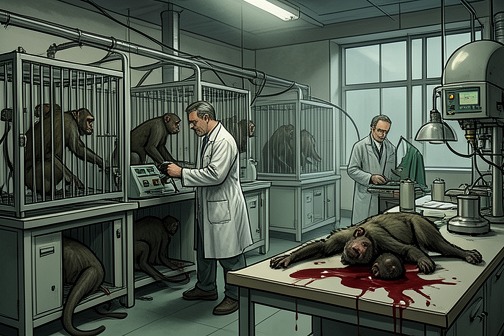
The Behring Works produced vaccines using kidney cells from African green monkeys and regularly imported animals from Uganda. In 1967, an air shipment totaling roughly five or six hundred monkeys arrived in Germany. The book estimates that only two or three were incubating the virus and says they may not have appeared ill. After the animals reached the factory, the infection spread among them, and some died before the agent emerged in the human population.
The first known human case was Klaus F., a Behring Works employee who fed the monkeys and cleaned their cages. He became ill on August 8, 1967, and died two weeks later. The account also records subsequent infections among people handling animals or laboratory materials: a monkey-keeper returned from holiday and killed monkeys from August 14 to 23 before developing symptoms, while a laboratory assistant fell ill after breaking a test tube containing infected material. These episodes show how routine tasks at the factory became points of contact with an infection that had arrived hidden in an apparently ordinary shipment.
## Human toll and scientific significance
The outbreak caused 31 known human infections, seven of them fatal. The book gives Marburg a human fatality rate of about one in four, contrasting it with the much higher mortality attributed there to Ebola [Zaire](entity:location-recall-location-72474dcf83fc). The disease could produce severe illness and sudden deterioration, even among patients receiving modern hospital care. Its danger was not simply that an unfamiliar virus had reached people, but that its course and effects were still poorly understood.
Marburg was the first virus identified in the filovirus family. The book describes filoviruses as threadlike particles, unlike the more commonly ball-shaped appearance of viruses, and notes that Marburg can coil into rings. After [Charles Monet](entity:character-recall-character-charles-monet-afa70013fbbd) died, Marburg was grouped with two types of Ebola virus, Ebola Zaire and Ebola [Sudan](entity:location-recall-location-3c5b829c70e6). In this account, Marburg is the least lethal of the three, but its identification opened a larger field of concern: related viruses could move between animal and human hosts, while producing sharply different outcomes.
## The search for the source
The outbreak prompted urgent efforts to determine where the monkeys had been trapped and where the virus lived in nature. Investigators reasoned that monkeys were unlikely to be the virus’s natural host because the infection killed them too quickly to circulate successfully in them. A [World Health Organization](entity:organization-recall-organization-world-health-org-e8717df8dcd9) team went to Uganda after the outbreak but could not identify the precise source, and the question remained open for years.
In 1982, an English veterinarian known as [Mr. Jones](entity:character-recall-character-mr-jones-9e7d3f1c27ae) supplied new eyewitness information. During the 1967 outbreak he had worked temporarily as an inspector at the [Entebbe](entity:location-recall-location-092647c419ea) export facility from which the infected monkeys had been shipped. The trader operating the facility sent about 13,000 monkeys a year to Europe. Mr. Jones said inspections were visual: animals that looked sick or injured could be removed, but apparently healthy animals were still shipped. He later felt responsible because he had signed an export certificate, though the account emphasizes that he could not have known the animals carried Marburg.
Mr. Jones recalled that some monkeys had been trapped in the [Sese Islands](entity:location-recall-location-64466b4d6508) in [Lake Victoria](entity:location-recall-location-1ad4c7a50066). The trader bought animals from villagers, who regarded the monkeys as pests, and reportedly released sick animals on another island near Entebbe. Mr. Jones could not remember the name of that island, and the account does not establish that it was the virus’s natural home. His recollection narrowed the route by which the monkeys may have entered the trade without solving the ecological mystery behind the outbreak.
## A trade network and an unresolved ecology
The outbreak sits within a wider history of primate capture and export. The book describes the expanding trade in monkeys for medical research as a system in which wild animals were trapped, transported, and sometimes crowded together across species. Such conditions could expose handlers and animals to unusual viruses and create opportunities for infections to cross species. That broader risk helps explain why the monkey shipment mattered, but it does not prove the exact route by which Marburg entered the first human case or identify its reservoir.
The account also places emerging viruses against the pressures on tropical habitats. Around [Mount Elgon](entity:location-recall-location-mount-elgon-31b1549aa463), forest clearance for firewood and grazing was shrinking wild habitat; more broadly, the book links human settlement and ecological disruption with the emergence of infections from tropical ecosystems. These observations frame Marburg as part of a larger problem of contact between people, wildlife, and changing landscapes, not as proof that a particular act of forest clearing caused the 1967 outbreak. Its decisive answer remained incomplete: the transport route to Germany was reconstructed, but the virus’s natural source was not.
Event 2
1976 Sudan Ebola outbreak
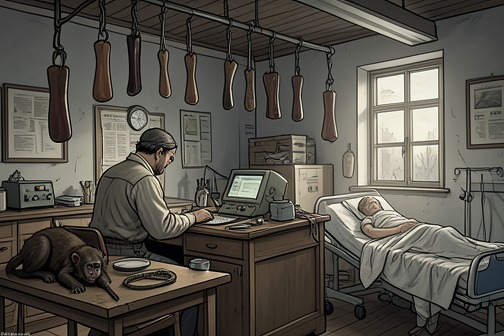
The [1976 Sudan Ebola outbreak](entity:event-recall-event-1976-d30b7edd8737) was the first recognized emergence of Ebola [Sudan](entity:location-recall-location-3c5b829c70e6): a lethal epidemic traced back through chains of infection to a quiet storekeeper in [Nzara](entity:location-recall-location-2dc13bc60878), then carried from person to person and amplified in a hospital in [Maridi](entity:location-recall-location-addd9b419d19). Its rapid spread and high fatality rate made it a grave danger, but the outbreak subsided within central Africa. The account leaves both the initial route of infection and the virus’s continuing natural host unresolved.
## Index Case and Setting
On July 6, 1976, [Yu. G.](entity:character-recall-character-yu-g-17642e47f120) went into shock and died in southern Sudan, about five hundred miles northwest of [Mount Elgon](entity:location-recall-location-mount-elgon-31b1549aa463). He was a salaried storekeeper at a cotton factory in Nzara, where he worked at a desk in a room stacked with cotton cloth. [Bats](entity:creature-recall-creature-c5cf1e129afb) roosted in the ceiling near his desk, but no evidence established that they carried the virus. The account also considers insects trapped in cotton or rats in the factory as possible routes, while stressing that Yu. G. might have been infected somewhere else entirely. His place of work offered a clue, not a demonstrated source.
The surrounding region was home to the Zande and included savanna, riverine forest, and plantations of teak, fruit trees, and cotton. The town had grown in recent years as the population increased across equatorial regions. This setting places the outbreak among people living and working close to cultivated land and forest, but it does not identify a particular animal or environmental source for the virus.
Yu. G. did not go to a hospital. He died on a cot in his family compound, and his family gave him a traditional Zande funeral, leaving his body beneath a mound of stones in a clearing of elephant grass. Doctors from Europe and America later visited his grave to reflect on its significance and pay their respects. No photograph recorded his appearance, and he was remembered as a quiet, unremarkable man, known chiefly to his family and a few coworkers. The contrast between his ordinary life and the epidemic traced to him gives the outbreak its stark index point: he mattered to the chain of transmission, though nothing in his life had made him remarkable to the town.
## Transmission from Nzara to Maridi
A few days after Yu. G.’s death, two salaried men who worked at nearby desks in the same factory room also became ill and died. One was [P. G.](entity:character-recall-character-p-g-9b853dd7d3eb), a popular man with a wide circle of friends. The account identifies him as an important link in the virus’s spread through Nzara. Transmission apparently occurred readily through person-to-person contact, including sexual contact, and continued through as many as sixteen generations of infection. Many people died, though the virus’s rapid movement from host to host allowed its chain of transmission to continue.
From Nzara, the outbreak reached Maridi, where a hospital became a major center of spread. Patients were given injections with needles that were not reliably cleaned between uses. The account says the virus moved through the hospital via contaminated needles and then infected medical staff. In this way, a medical setting intended to treat illness became an amplifier: injections connected patients to one another, and transmission then extended from the hospital into patients’ families. The narrative presents these needle practices as a likely mechanism of spread within the hospital, rather than as an explanation for how the virus first entered the human population.
The hospital’s crisis also included reports of disorientation and behavior that observers interpreted as mental derangement. Some dying patients removed their clothes and left the hospital, apparently confused about where they were or how they had arrived in that condition. The account links these observations to possible brain damage from Ebola, while cautioning that fear and the experience of severe illness could also have contributed. It does not treat every disturbing behavior as proof of a specific neurological effect.
## Fatality and the Outbreak’s Decline
Ebola Sudan had an estimated case-fatality rate of 50 percent: about half of those who developed the disease died, often quickly. The book compares that rate with the Black Plague during the [Middle Ages](entity:time-recall-time-middle-ages-666e8ea3c3d5). It also sketches a hypothetical alternative in which the outbreak might have reached Khartoum, Cairo, and cities farther afield. That imagined route marks the potential stakes; it is not what happened. The epidemic did not spread around the world, and the crisis passed with little notice outside the region.
The outbreak’s decline had more than one possible explanation. As the disease spread through the Maridi hospital, surviving medical staff panicked and fled into the bush. Their departure halted the use of the dirty needles and emptied the hospital, actions that probably helped break the chain of infection. The virus may also have burned through available chains of contact because it killed people so quickly. The account emphasizes that Ebola Sudan was not airborne: it spread through blood, and infected people who were gravely ill had limited opportunities to pass it on before dying. These explanations are presented as factors that may have constrained transmission, not as a complete or certain reconstruction of why the outbreak ended.
The epidemic killed a few hundred people in central Africa and then subsided. The virus disappeared from the recognized outbreak, but the account does not suggest that it was eradicated. It proposes that Ebola Sudan retreated into the bush and continued cycling in an unknown host, with the potential to change and emerge in another form. The outbreak’s end, in other words, was not the same as an explanation of where the virus went.
## Unresolved Origins and Wider Significance
The account’s wider ecological argument places emerging viruses in habitats undergoing human settlement and environmental change. It describes tropical forests as reservoirs of animal and viral diversity and argues that disturbance at forest margins can bring people into new contact with infectious agents. That framework helps explain why the outbreak is narrated alongside questions of land use, population growth, and contact with wildlife. It does not prove that deforestation, a particular animal, or any single human activity caused the 1976 emergence. For Yu. G.’s infection, the route remained unknown.
The narrative also distinguishes Ebola Sudan’s brief, intensely destructive course from the continuing spread of [AIDS](entity:state-recall-state-aids-d9fc10c34f2a), using fire as a contrast: one epidemic burned through chains of infection and subsided, while the other persisted. Its broader warning is that a virus can disappear from view without ceasing to exist as a risk. By returning from the Maridi hospital to the unknown host in the bush, the account makes uncertainty part of the outbreak’s history: the epidemic ended, but its origin and the conditions for a future emergence remained open questions.
Event 3
1976 Zaire Ebola outbreak
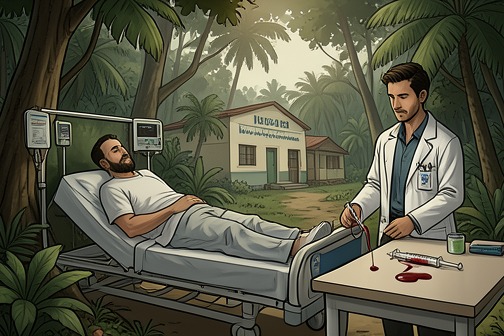
The [1976 Zaire Ebola outbreak](entity:event-recall-event-1976-ebd74bd53b94) brought a previously unidentified, highly lethal virus into villages around [Yambuku Mission Hospital](entity:organization-recall-organization-yambuku-mission-0bd0a6f5d135) and exposed how a small number of blood-contaminated injections could turn a local emergence into a regional crisis. The first human infection was never established with certainty: the outbreak’s trail ran through a possible exposure in the forest, a schoolteacher’s illness, and a clinic where a few syringes were used on hundreds of patients. Later, a separate alarm in [Kinshasa](entity:location-recall-location-3327c37641ad) produced extraordinary containment measures, but the feared spread through the crowded city did not materialize.
## Emergence and the unknown source
The outbreak appeared in early September 1976 in [Bumba Zone](entity:location-recall-location-14efff97fbad), about 500 miles west of the Ebola [Sudan](entity:location-recall-location-3c5b829c70e6) emergence that had begun two months earlier. The region was a sparsely settled expanse of tropical forest, villages, and rivers. The virus’s first human host was never identified. The account considers several possible routes into the human world: contact with the blood of a hunted animal, an insect, or another source in the forest, perhaps through a break in the skin. These possibilities remain hypotheses, not a recovered chain of transmission.
A schoolteacher from Yambuku and several friends had recently traveled north in a Land Rover borrowed from the mission. Near the Obangui River, they stopped at a roadside market; one friend bought a freshly killed monkey, while the teacher bought antelope meat. Any of them could have handled either animal’s meat on the journey home. The teacher’s family ate the antelope, and the next morning he felt unwell. That sequence places the trip in the investigation’s chronology, but does not establish that the meat infected him.
## The hospital as an amplifier
Before reporting to work, the teacher went to Yambuku Mission Hospital for an injection. The clinic began each day with five hypodermic syringes, which staff used to treat hundreds of patients in the outpatient and maternity clinics. Needles were sometimes rinsed in warm water, but often passed from one patient to the next without being rinsed. If an earlier patient carried Ebola, that practice offered a plausible route for blood-to-blood transmission. The teacher became the first known case of Ebola [Zaire](entity:location-recall-location-72474dcf83fc), although the account suggests that an unidentified sick person may have received an injection from the same needle before him.
The virus then appeared in 55 villages surrounding the hospital. Patients who had received injections were among its first victims; transmission continued through families, including relatives who prepared the dead for burial. The hospital’s nursing staff was struck particularly hard, followed by the Belgian nuns who worked there. In this way, the clinic’s routine—five needles serving a large daily flow of patients—became a suspected bridge between an unknown introduction and a much wider outbreak. The precise first exposure remained unresolved even as the pattern of spread made the reused needles a compelling explanation.
One nun, a midwife, became ill after assisting with a delivery in which the mother was dying of Ebola. The midwife had direct contact with the mother’s blood and subsequently died within five days. Another nun, [Sister M.E.](entity:character-recall-character-sister-m-e-0bedcdf79aa1), also became gravely ill. A priest and Sister E.R. drove her from Yambuku to [Bumba](entity:location-recall-location-ccc30b0e65fd), then arranged a small plane to Kinshasa so she could receive care at [Ngaliema Hospital](entity:organization-recall-organization-ngaliema-hospita-3969cd934fc2). Her transfer moved the crisis beyond the outbreak zone and made the possibility of urban transmission an urgent concern.
## Kinshasa alarm and containment
[Nurse Mayinga N.](entity:character-recall-character-nurse-mayinga-n-f2025838e79a), another seriously ill patient in Kinshasa, became the focus of that concern after reports circulated that a sick nurse had spent two days moving through the city and encountering people in crowded places. The rumors traveled through mission and government networks, reached diplomats and Europe, and triggered an alert at the [World Health Organization](entity:organization-recall-organization-world-health-org-e8717df8dcd9). Officials feared that an infected person’s movements in a city of two million might presage a much larger epidemic. European governments considered stopping flights from Kinshasa.
President [Mobutu Sese Seko](entity:character-recall-character-mobutu-sese-seko-729ee7142d0f) ordered soldiers to guard Ngaliema Hospital, allowing only doctors to enter or leave and enforcing quarantine among much of the medical staff. The army also established roadblocks around Bumba Zone and was ordered to prevent people from leaving. The [Congo River](entity:location-recall-location-a0eeb3e7eb06) was the area’s principal connection to the outside world, but riverboat captains refused to stop, even when people on the banks appealed to them. Radio contact with Bumba was eventually lost, leaving officials without reliable information about conditions upriver.
Mayinga died at Ngaliema Hospital. Medical teams identified 37 people who had had face-to-face contact with her during her time in the city and confined them in biocontainment pavilions for several weeks. None developed the disease. Even a person who had shared a bottle of soda with her remained well. The contrast between the alarm and the outcome became central to the episode: Mayinga’s movements created a grave public-health concern, but the contacts investigators located did not sustain an urban chain of infection.
## The outbreak’s retreat and its unresolved meaning
While the Kinshasa response took shape, authorities received no word from the doctors upriver in Bumba. [Karl M. Johnson](entity:character-recall-character-karl-m-johnson-867d0d6ec696), fearing that the virus might spread through the city, arranged for an isolation ship to serve as a refuge for doctors on the Congo River. In the United States, the Army’s 82nd Airborne Division prepared to evacuate Americans from Zaire if cases began appearing in Kinshasa. The anticipated urban outbreak never came. Instead, the epidemic subsided near the headwaters of the [Ebola River](entity:location-recall-location-5b3c92d7e231) and disappeared from view in the forest. The account offers possible reasons for its failure to spread farther: the virus was not shown to travel through the air, and its rapid course could limit the time an infected person had to transmit it. These explanations help make sense of the outcome but do not identify the reservoir or settle how the outbreak ended.
The episode also became part of a wider argument about emerging viruses and ecological change. The book places outbreaks such as Ebola alongside the pressures of forest disturbance, human settlement, and the capture and trade of primates, while acknowledging that such connections do not prove the origin of this particular outbreak. Its closing image is not of a source finally found, but of a virus that vanished into an ecosystem whose role remained unknown. The outbreak’s history therefore holds two facts in tension: investigators could trace plausible routes of spread through injections and close contact, yet the first infection and the virus’s natural host remained mysteries.
Event 4
1980 Kenya Marburg virus incident
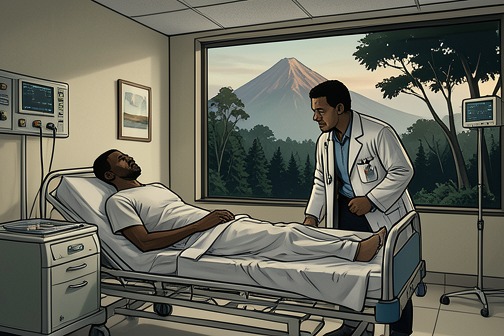
The [1980 Kenya Marburg virus incident](entity:event-recall-event-1980-1d6b92e57a6f) turned an unexplained death at [Nairobi Hospital](entity:organization-recall-organization-nairobi-hospital-614226f0a363) into a hospital-wide emergency. [Charles Monet](entity:character-recall-character-charles-monet-afa70013fbbd) arrived critically ill and died before his physicians knew what had caused his condition; [Shem Musoke](entity:character-recall-character-shem-musoke-277c99f9e4bc), the doctor who treated him, became infected after direct exposure to Monet’s blood. Musoke’s eventual recovery and the absence of other proven cases limited the outbreak, but the episode revealed how a single unidentified infection could place an entire medical institution at risk.
## Background and Uncertain Origins
The incident followed Monet’s camping trip to [Mount Elgon](entity:location-recall-location-mount-elgon-31b1549aa463) with a female companion whose name was not remembered. The mountain rises across the border between [Uganda](entity:location-recall-location-c04ffded0a14) and [Kenya](entity:location-recall-location-521f724331b0), an isolated forested mass surrounded by settled landscapes. Its slopes supported farms and grazing, while clearing for firewood and pasture was shrinking the forest habitat. These changes formed part of the book’s broader account of human activity at the edges of tropical ecosystems, but they do not establish how Monet acquired [Marburg](entity:location-recall-location-31dde270ed67) virus.
The narrative links the virus in Monet to his Mount Elgon trip and raises the possibility of an origin in the region, including [Kitum Cave](entity:location-recall-location-03ac1b404797). The specific route remains unresolved: the evidence does not identify a particular animal, contact, or moment of transmission. The uncertainty matters to the event’s history. Monet’s illness was the first visible point in a chain that led to a second case, but its source could not be reconstructed with confidence.
## Monet at Nairobi Hospital
On January 15, 1980, Monet was in the casualty department at Nairobi Hospital when his condition abruptly worsened. Staff transferred him to intensive care, where young physician Shem Musoke responded to an emergency call. Monet was suffering from a severe hemorrhagic illness and had stopped breathing. Musoke worked to reopen his airway and restore breathing; in the course of this urgent intervention, he was exposed to Monet’s blood while not wearing gloves.
The effort to stabilize Monet continued, but his condition was beyond the hospital’s ability to reverse. His blood would not clot normally, and attempts to establish a transfusion were unsuccessful. He remained unconscious and died in the early hours of the morning, with Musoke staying at his bedside. An autopsy found extensive damage to his liver and kidneys, but the findings did not yield a single clear cause of death. The hospital recorded the death as fulminating liver failure, a description of the organ failure rather than an explanation of its underlying cause.
## Musoke’s Illness and Diagnosis
Nine days after Monet’s death, on January 24, Musoke developed back pain, fever, and red eyes. He initially considered familiar explanations, including malaria, and tried antimalarial medication; later abdominal pain led him to suspect typhoid and take antibiotics. Neither treatment helped. As his pain intensified and jaundice appeared, he could no longer continue working and sought care at the hospital where he practiced.
An examination and liver imaging did not provide a clear diagnosis. Surgeons operated to investigate the possibility of a liver or gallbladder problem, but they found no gallstones. During surgery, Musoke’s blood would not clot, and the team struggled to control persistent bleeding. His condition deteriorated afterward, with his kidneys beginning to fail. David Silverstein, who took over his care, suspected an unusual virus and sent frozen serum samples to the [National Institute of Virology](entity:organization-recall-organization-national-institu-99206c27284c) and the Centers for Disease Control and Prevention for testing.
The result changed the meaning of the preceding days. Silverstein learned by telephone that Musoke’s blood tested positive for Marburg virus. The diagnosis connected Monet’s unexplained death to Musoke’s illness and raised an immediate question for the hospital: who else had been exposed? Musoke was treated with supportive care while the staff awaited a fuller understanding of the disease. Around ten days after he fell ill, his condition began to improve. He recovered gradually and completely, later returning to practice at Nairobi Hospital as a member of Silverstein’s group.
## Quarantine and Aftermath
Once the danger of Marburg became clear, Silverstein persuaded Kenyan health authorities to close Nairobi Hospital temporarily. For a week, arriving patients were turned away. Sixty-seven people, most of them hospital staff, were quarantined inside: personnel who had attended Monet or Musoke, performed Monet’s autopsy, operated on Musoke, or handled material from either patient. The surgeons who had treated Musoke remained under observation for two weeks. The response reflected the breadth of contact within a hospital, where care, procedures, and the handling of patient materials had connected many workers to the two cases.
The quarantine did not uncover another proven Marburg case. Musoke was the only other person at the hospital known to have contracted the disease. His recovery therefore closed a frightening episode without establishing that the virus had spread widely among staff or patients. The hospital’s temporary shutdown, however, demonstrated the consequences of uncertainty: even before a complete transmission chain could be mapped, the possibility of further exposure was enough to interrupt ordinary medical services and isolate dozens of people.
## The Strain and Its Significance
Blood samples from Musoke were sent to laboratories and became a source of living Marburg virus for scientific collections. The virus in those samples had reached him through his treatment of Monet; its earlier origin remained uncertain. The strain was subsequently known as the Musoke strain, and samples were preserved in freezers belonging to the United States Army. The case thus left two distinct legacies: a record of a contained human emergence and a preserved viral strain available for research.
The book frames the incident as a microbreak: an isolated emergence that signaled a potentially larger danger without developing into a sustained outbreak at Nairobi Hospital. Its language also compares a virus to a predator and an infected person to a human virus bomb. These images convey the abrupt shift from an ordinary clinical encounter to a threat involving a whole institution, but they do not establish intention or prove a particular ecological pathway. The grounded account is narrower and more consequential: Monet’s illness went unidentified, Musoke was infected while treating him, and a rapid diagnosis led to quarantine before another proven case appeared.
Event 5
Nancy Jaax's 1983 Ebola laboratory exposure accident
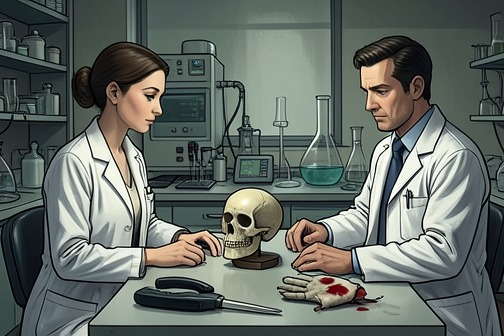
[Nancy Jaax's 1983 Ebola laboratory exposure accident](entity:event-recall-event-nancy-jaax-1983-6720c6a8d3fe) was a near miss in which contaminated material passed through damaged protective layers but did not reach her skin. The incident turned a routine procedure into an urgent test of containment: Jaax had to leave the work area, decontaminate, and determine whether the last glove between her and the virus had remained intact.
## Work in containment
Jaax was working with Tony Johnson on a primate specimen in a [Biosafety Level 4](entity:concept-recall-concept-biosafety-level-4-bf65d2635a97) laboratory. Because a powered bone saw could send particles and droplets into the air, the researchers used a rongeur, a heavy pair of pliers, to open the skull. They removed tissue samples and placed them in preservative. The procedure was slow and required close coordination: Johnson watched Jaax’s technique, and she handed him instruments while they worked.
The danger became visible when Johnson noticed the condition of Jaax’s right glove. Its outer layer had torn across the palm. When she removed that glove, she saw that the protective glove built into her suit was also compromised: a crack at the wrist had allowed contaminated material to reach the area around her inner glove. The equipment had not failed in one clean, obvious break. One damaged layer had exposed another, and Jaax could not yet tell whether the final barrier had also failed.
## Exit and decontamination
Jaax indicated the damage to Johnson, who inspected the crack and directed her to leave while he secured the work area and followed. She disconnected her suit from its air supply and went to the air lock, keeping her right arm still. The problem was immediate and practical as well as medical: she had to get out of her boots and move through the exit procedure without relying on the compromised hand. She kicked off the boots, entered the air lock, and started the decontamination cycle.
The cycle lasted seven minutes. Water jets first washed the outside of the suit; a chemical spray followed. The air lock was dim, and the spray clouded the faceplate, leaving Jaax unable to see clearly while she waited. Decontamination could clean the suit’s exterior, but it could not settle the central question: if contaminated material had entered the glove, the chemical wash might not reach it. The delay before Johnson could finish decontaminating and answer her made the procedure a period of uncertainty, not reassurance.
When the cycle ended, Jaax removed the suit. The suit glove had leaked: contaminated material had passed through the damaged layers and reached the last glove, directly over a Band-Aid covering a cut on her palm. She rinsed her hand and carefully removed that final glove. The blood she saw around the Band-Aid was from her own cut. To check whether the glove itself had a pinhole, she held it under running water and watched it fill. It remained intact. The test established that the contamination had reached the final barrier but had not passed through it.
## Finding and aftermath
Jaax collapsed against the wall after the glove test, and Johnson found her there when he emerged from the air lock. The accident report concluded that she had not been exposed to Ebola virus. At the time, the working understanding was that the agent spread through direct contact with blood and bodily fluids; with the last glove intact, the report found no route by which the virus had entered her bloodstream. She drove home that night rather than being admitted to the Institute’s Level 4 hospital, known as The Slammer.
The danger remained personal even after the technical question had been resolved. While waiting, Jaax had thought about her children, who was caring for them, and the household tasks she had left undone. The prospect of illness meant not only a possible stay in The Slammer but an abrupt interruption of ordinary family responsibilities. Those concerns make the accident more than an equipment failure: the risk inside the laboratory extended, in her mind, into the life waiting outside it.
That night, she called [Jerry Jaax](entity:character-recall-character-jerry-jaax-95051376e6ab) in Texas and told him what had happened. He reacted with alarm and spoke forcefully about the danger of working with Ebola in a protective suit. Jaax understood his response as fear rather than anger and remained calm, telling him that she believed she would be all right. Their exchange shows how the incident reached beyond the laboratory: the worker who had managed the emergency with procedural focus was also a wife explaining a frightening near miss to someone who could not be there.
## Significance
The episode makes containment tangible through the sequence of barriers and checks: the outer glove tore, the suit glove had a crack, the final glove held, and the water test verified that it had not leaked. The outcome depended not on the suit remaining wholly undamaged but on the last layer remaining intact. In the account’s retrospective chain of infection, the primate had caught the virus from Mayinga N., who had caught it from a nun in [Zaire](entity:location-recall-location-72474dcf83fc). That chain places Jaax’s accident within the human and animal transmission history of Ebola, while the accident report draws a firm distinction between a breached suit and an actual infection. The near miss ended without a recorded exposure, but it showed how little separated a contained laboratory procedure from a potentially life-threatening contact.
Event 6
Accidental Ebola infection of USAMRIID control monkeys
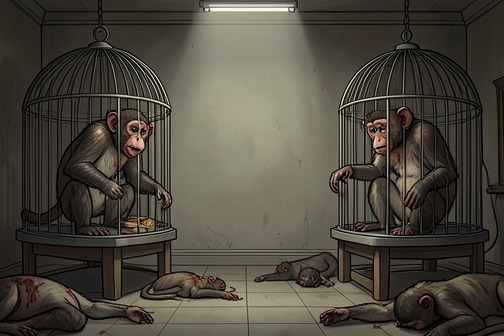
The [Accidental Ebola infection of USAMRIID control monkeys](entity:event-recall-event-usamriid-5df8a49e0819) overturned a key assumption about how Ebola could spread: two animals that had not been deliberately infected, and were separated from sick monkeys by open floor, nevertheless became ill and died. Their deaths transformed an experiment intended to test drugs into evidence that the virus might travel through the air, although the precise route remained unknown.
## The experiment and its controls
[Gene Johnson](entity:character-recall-character-gene-johnson-4ea21a19acdb)’s experiment used the Mayinga strain of Ebola [Zaire](entity:location-recall-location-72474dcf83fc), taken from frozen blood and injected into monkeys. The strain had come from [Nurse Mayinga N.](entity:character-recall-character-nurse-mayinga-n-f2025838e79a), who died of Ebola in 1976. Johnson treated the infected animals with drugs in the hope of opposing the infection, but none of the treatments worked: all the deliberately infected monkeys died. The two control monkeys, housed in cages across the room, were initially the experiment’s only survivors because they had not been infected.
The distinction between the groups mattered. The controls had not received the virus, and they had not come near the sick animals. They were separated from them by open floor, not described as sharing a cage or direct contact. Their subsequent illness therefore could not be explained by the experiment’s intended injection procedure.
## The unexpected infections
Two weeks after [Nancy Jaax](entity:character-recall-character-nancy-jaax-a869e6975ccc)’s glove incident, the healthy controls developed red eyes and nosebleeds, then deteriorated and died. The timing made the event especially alarming: the animals had remained well while the deliberately infected group fell ill, but later showed signs of the same disease despite their separate placement. The experiment had produced no successful drug treatment; instead, it exposed an unanticipated route by which infection might move between animals.
The incident followed a separate breach of Jaax’s protective suit during work with an infected monkey. The accident report concluded that she had not been exposed because her last glove remained intact. That assessment rested on the prevailing belief that Ebola spread through direct contact with blood and bodily fluids. The control monkeys’ illness raised a different question about what could cross the laboratory room, without establishing that Jaax herself had been infected or that the controls’ route was definitively known.
## A possible airborne route
The book presents inhalation as the most likely explanation: the control monkeys may have breathed in virus carried in the air. Jaax later suggested that monkeys could spit or throw material, and that washing cages with hoses could generate an aerosol of droplets from secretions. These were proposed mechanisms, not a demonstrated account of the precise transmission event. The central finding was narrower but consequential: the controls became infected without being deliberately inoculated or placed in direct contact with the sick monkeys.
This observation reinforced earlier experimental work by Johnson. In 1986, he had infected monkeys with [Marburg](entity:location-recall-location-31dde270ed67) and Ebola by allowing them to breathe the viruses into their lungs, finding that a very small airborne dose could initiate explosive infection in a monkey. The control-monkey incident gave that laboratory finding immediate force within the Ebola experiment itself. It suggested that separating animals across a room might not, by itself, prevent transmission.
## Scientific and ethical consequences
For Jaax, the experiment’s results sat alongside the moral strain of working with suffering animals. She regarded care for animals as a veterinarian’s duty and medical research as an obligation to help save human lives; in this work, those commitments collided. The controls’ deaths made the scientific stakes more urgent, while the failed drug tests offered no treatment success to offset the loss of the animals.
The episode became an early warning within the larger account of Ebola containment: the virus’s behavior could exceed assumptions built around direct contact. It did not prove that Ebola routinely spread through air between humans, nor did it identify the exact route taken in this room. It did show that an apparently protected control group could become ill in proximity to infected animals, turning an unexplained outcome into a major clue about airborne transmission risk.
Event 7
Peter Cardinal's 1987 Marburg virus case

[Peter Cardinal](entity:character-recall-character-peter-cardinal-ed0b36b1becb)’s 1987 [Marburg](entity:location-recall-location-31dde270ed67) virus case turned the death of a ten-year-old boy into a laboratory investigation and a renewed search for the virus’s hidden reservoir. After Cardinal died at [Nairobi Hospital](entity:organization-recall-organization-nairobi-hospital-614226f0a363), [Eugene Johnson](entity:character-recall-character-eugene-johnson-8d7e09775b15) received his blood serum and confirmed that it contained Marburg virus. The investigation traced Cardinal’s travels to [Kitum Cave](entity:location-recall-location-03ac1b404797) on [Mount Elgon](entity:location-recall-location-mount-elgon-31b1549aa463), a place also associated with [Charles Monet](entity:character-recall-character-charles-monet-afa70013fbbd), but did not determine how or where Cardinal contracted the infection.
## The case and the search for an explanation
On September 2, 1987, Eugene Johnson waited outside the customs gates at Dulles International Airport for a passenger arriving from [Kenya](entity:location-recall-location-521f724331b0). The man handed him a taped cardboard box concealed in bath towels. It contained serum from Cardinal, who had died a day or so earlier at Nairobi Hospital. His illness had presented as an unidentified, severe infection of the kind that raised concern about a Level 4 virus. Johnson considered whether to destroy the sample without testing it, since most specimens sent to the Institute yielded no unusual agent. He decided instead to analyze it before the serum deteriorated.
Johnson opened the package in a Level 3 staging area and found a metal cylinder marked with a biohazard symbol. Inside were two small vials of golden serum. To work with their contents, he transferred the sample into a sealed Level 4 cabinet, where its rubber gloves allowed him to handle material without direct contact. The careful containment and the improvised, layered packaging made the sample’s journey part of the case: the serum had traveled from a fatal illness in Kenya to a laboratory in the United States, where its contents could be investigated under controlled conditions.
Cardinal’s family had come to Kenya through his parents’ work for a Danish relief organization. His parents lived in [Kisumu](entity:location-recall-location-05aa9e35f0e6), and his older sister attended a private school in [Nairobi](entity:location-recall-location-a53c60f385d3). Cardinal was a boarding-school student in Denmark; during his visit to Kenya, he and his sister spent much of their time together. The family traveled around the country, including a stay in [Mombasa](entity:location-recall-location-0b2b5fcedd1d). When Cardinal became ill there, doctors initially diagnosed malaria. His mother doubted that explanation and pressed for him to be taken to Nairobi. The Flying Doctors air-ambulance service transported him, and he came under the care of David Silverstein at Nairobi Hospital.
## Identification in the laboratory
Johnson inoculated living monkey cells with a small amount of Cardinal’s serum and watched for changes. The cells began to burst and die, evidence that an active agent was replicating in them. He then transferred fluid from the cultures into three rhesus monkeys. Two died; the third became critically ill but survived. A further test in guinea pigs also proved lethal, and the males developed markedly swollen, discolored testicles. Taken together, the results showed an agent that multiplied readily and caused severe disease in more than one species.
Johnson concluded that the agent was Marburg. Its ability to infect monkeys, humans, and guinea pigs informed the investigation’s central biological question: if it was so damaging in these species, might its natural host be another animal or insect that it did not kill? That remained a hypothesis, not an identification of the reservoir. The tests established the virus in Cardinal’s serum and demonstrated its effects in laboratory animals; they did not reveal the original source of his infection.
## Mount Elgon and the shared cave
Once Marburg had been identified, Johnson sought a detailed account of Cardinal’s movements. He contacted Peter Tukei, a scientist at the [Kenya Medical Research Institute](entity:organization-recall-organization-kenya-medical-re-a2aad7c20778), and asked him to locate and interview the family. Tukei later reported that Cardinal had visited Kitum Cave on Mount Elgon. That detail connected his case to Charles Monet’s: their paths had crossed at the cave, the one known place shared by the two cases. The overlap gave investigators a concrete location to examine, but the questions it raised—what the visitors touched or breathed, and what might live in the cave—remained unanswered.
The wider setting made the search more consequential without resolving it. Mount Elgon rises across the Kenya–[Uganda](entity:location-recall-location-c04ffded0a14) border as an isolated, forested world above surrounding plains. Its slopes support villages and farms, while forest is cleared for firewood and grazing; elephants were also disappearing from the mountain. These conditions describe human activity and a changing habitat, not proof that any particular change caused Cardinal’s infection. The case likewise did not establish that the cave itself was the source. It supplied a shared lead in a landscape where the virus’s natural reservoir remained unknown.
## Consequences and significance
The case converted a blood specimen into two kinds of evidence: a laboratory confirmation and a geographical clue. The experiments showed that Cardinal’s agent was a fast-replicating Marburg strain capable of killing macaques and guinea pigs as well as infecting human beings. The family history and travel investigation, meanwhile, placed Cardinal at Kitum Cave and brought his case into relation with Charles Monet’s. Neither line of inquiry closed the central gap between exposure and infection: the book does not establish precisely how Cardinal acquired Marburg or identify the reservoir in which the virus persisted.
That unresolved ending is essential to the event’s significance. Marburg had disappeared from view after earlier known cases, but Cardinal’s serum showed that the virus had not vanished. A child’s fatal illness renewed the search, while the matching cave location offered a way to frame it. The evidence narrowed the inquiry to a particular place and a set of biological possibilities, yet stopped short of a definitive origin story.
Event 8
1988 Kitum Cave virus investigation expedition
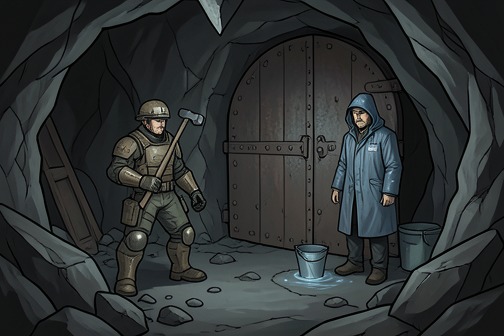
The [1988 Kitum Cave virus investigation expedition](entity:event-recall-event-1988-kitum-cave-f2f8f71789ce) brought Kenyan and U.S. researchers to [Mount Elgon](entity:location-recall-location-mount-elgon-31b1549aa463) to search for a possible natural source of [Marburg](entity:location-recall-location-31dde270ed67) virus. Organized after [Peter Cardinal](entity:character-recall-character-peter-cardinal-ed0b36b1becb) died of the disease, the expedition turned an uncertain clue—a possible exposure in [Kitum Cave](entity:location-recall-location-03ac1b404797)—into a coordinated field investigation. Its elaborate precautions and use of sentinel animals reflected both the danger of the question and the limits of the available means for answering it.
## The clue and the unresolved question
Peter Cardinal’s illness had prompted investigators to examine whether his visit to Kitum Cave could explain his infection. He had wanted to collect crystals there and struck the cave walls with a hammer. His parents recalled this interest, and investigators considered whether a small cut might have allowed the virus to enter his bloodstream. The rocks were broken up by the driver and washed by the cook; blood tests of those two people were negative. A crystal contaminated by animal urine or the remains of an insect was one possibility, not an established route of infection. Even if a crystal had caused a cut, that would not reveal where Marburg virus lived in nature or identify its reservoir host.
A prior experiment by [Gene Johnson](entity:character-recall-character-gene-johnson-4ea21a19acdb) had shown that monkeys could develop explosive infections after breathing small amounts of airborne Marburg or Ebola virus. That finding shaped the team’s approach to the cave: the possibility of airborne transmission was enough to require respiratory protection, even though the source of Cardinal’s infection remained uncertain. On an initial scouting visit, Johnson and Kenyan colleagues used military gas masks and improvised head coverings. The visit helped him develop a plan for a larger search, but it did not resolve the question of the virus’s natural host.
## Organizing a field search
In spring 1988, half a year after Cardinal’s death, Johnson arrived in [Nairobi](entity:location-recall-location-a53c60f385d3) with twenty shipping crates of scientific equipment and biohazard gear. The supplies included military body bags, prompting the team to discuss in advance how their remains would be handled if a member died of Marburg. The preparations made the perceived risk concrete without making the expedition’s objective any less scientific: the team hoped to locate a virus that might be difficult to detect even if it was present in the cave.
The Kenyan government agreed to close Kitum Cave to tourists during the search. Peter Tukei of the [Kenya Medical Research Institute](entity:organization-recall-organization-kenya-medical-re-a2aad7c20778) headed the expedition; Johnson had conceived the plan, assembled equipment, and secured its funding. The team numbered thirty-five, most of them Kenyans, including wildlife naturalists, scientists, doctors, and laborers. Their work was therefore not simply an American research project transplanted to the mountain: it depended on a substantial Kenyan team and on the cooperation of the Kenyan government and research institute.
The investigators brought guinea pigs and seventeen monkeys in boxes and cages, including baboons, Sykes' monkeys, and African green monkeys. These animals were intended as sentinels, not as instruments that could identify a virus directly. The method depended on placing animals in or near the suspected site and watching for illness; if an animal became sick, researchers could attempt to isolate the virus from it and investigate how it had been exposed. The approach made the animals part of the field investigation, but its success depended on an uncertain event: that a sentinel would encounter the virus and become ill.
## Mount Elgon as a field setting
The team established its headquarters at [Mount Elgon Lodge](entity:location-recall-location-mount-elgon-lodge-0142a0e5a069), a deteriorating resort dating from the 1920s, when Britain ruled East Africa. Once built for sporting visitors and trout fishers, it had partly collapsed gardens, hardwood floors, round rooms, and African olive doors. Its remaining English-style hospitality, alongside a notice that suppliers had withdrawn the lodge’s credit, made the site a reminder of colonial institutions persisting in altered circumstances. For the expedition, it was a base near the road leading up the mountain to Kitum Cave.
The mountain itself was a distinctive ecological setting: Mount Elgon straddles the [Uganda](entity:location-recall-location-c04ffded0a14)-[Kenya](entity:location-recall-location-521f724331b0) border and rises as a broad forested landscape above surrounding dry plains. Its lower slopes supported farms and villages, while forest, bamboo, and alpine moor covered higher ground. The settlement ring around the mountain was steadily encroaching on the forest; trees were cut for firewood or to open grazing land, and elephants were vanishing. These details situate the expedition within a changing habitat, but they do not establish that forest loss caused Cardinal’s infection or identify the virus’s source.
The book places the cave investigation within wider questions about viruses, wildlife, and human movement. It describes theories that primate capture and trade brought different species into close contact and may have created opportunities for viruses to cross between hosts. Such proposals offer context for why researchers were interested in animal reservoirs, not proof of a particular origin for Marburg virus or of a link between the monkey trade and Cardinal’s case. The expedition’s focus remained narrower: test a suspected location and, if possible, find evidence of the virus in the field.
## Containment and sentinel procedures
The expedition moved its animals up the mountain in stages so they could acclimatize. Near the valley leading to Kitum Cave, the team cleared underbrush and established separate work areas beneath blue tarpaulins. The cave was treated as a BSL-4 hot zone. A nearby gray zone served as the boundary between work areas, where team members took chemical showers to decontaminate their suits after visiting the cave. Another tarp covered a Level 3 staging area for changing into and out of protective suits, while a separate Level 4 area was designated for animal necropsies.
Inside the cave, team members wore orange Racal suits designed for fieldwork involving suspected airborne biohazards. Each suit provided positive-pressure air through a battery-powered supply and filters; unlike a [Chemturion suit](entity:object-recall-object-chemturion-suit-bc38bcad8a78), it was portable and had a self-contained breathing apparatus. The main suit body could be disposed of after limited use. This equipment carried the laboratory’s containment logic into a remote field setting, where the team could not assume that ordinary clothing or an ordinary mask would be sufficient.
The team marked a route into the cave with avalanche poles to reduce the risk of getting lost, then positioned cages holding monkeys and guinea pigs along the route. Electrified wire, powered by a battery, surrounded the cages to deter leopards. The arrangement linked navigation, protection of the sentinel animals, and containment into one practical system: the researchers needed to place animals near the suspected source while also managing hazards that had nothing to do with the virus itself.
## Significance and limits
The expedition’s central achievement in the account is organizational and methodological: it converted a possible cave exposure into a sustained, carefully equipped search. Cardinal’s case supplied a lead, Johnson’s airborne-transmission experiment informed precautions, and the sentinel animals offered a way to investigate a place where no direct virus-detection instrument was available. Each step narrowed the question procedurally without turning suspicion into proof.
The evidence presented here does not establish that Kitum Cave was the source of Cardinal’s infection, that a crystal carried the virus, or that the expedition identified a natural host. Those distinctions matter. The cave was a plausible place to investigate, but plausibility, protective preparation, and the presence of sentinel animals were not themselves evidence that the virus lived there. The expedition thus stands at the boundary between field science and uncertainty: an ambitious attempt to make an elusive virus observable, conducted without a guaranteed route from exposure to discovery.
Event 9
Kitum Cave expedition
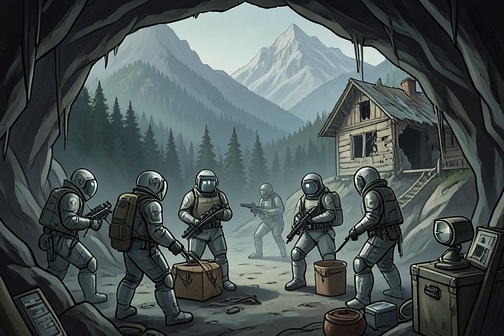
The [Kitum Cave expedition](entity:event-recall-event-kitum-cave-expedition-aae9bf6e63b3) was [Gene Johnson](entity:character-recall-character-gene-johnson-4ea21a19acdb)’s intensive search for [Marburg](entity:location-recall-location-31dde270ed67) virus’s natural host on [Mount Elgon](entity:location-recall-location-mount-elgon-31b1549aa463). It brought [Biosafety Level 4](entity:concept-recall-concept-biosafety-level-4-bf65d2635a97) methods into a remote cave system, using sentinel animals and broad environmental sampling to test whether the virus circulated among the local wildlife. The investigation found no evidence of infection, leaving the reservoir unidentified; its practical legacy was the field experience and equipment Johnson kept ready for a future outbreak.
## Setting and purpose
The expedition was based at [Mount Elgon Lodge](entity:location-recall-location-mount-elgon-lodge-0142a0e5a069), a deteriorating resort built in the 1920s, and worked in the mountain valley leading to [Kitum Cave](entity:location-recall-location-03ac1b404797). Mount Elgon is a forested volcanic massif on the [Kenya](entity:location-recall-location-521f724331b0)–[Uganda](entity:location-recall-location-c04ffded0a14) border, rising above surrounding dry plains. Its slopes supported farms and grazing, while villages formed a growing ring around the mountain. Trees were being cut for firewood and pasture, and elephants were disappearing. This landscape placed the search for a virus reservoir in a habitat under pressure, though the expedition did not establish that forest change had caused Marburg to emerge.
The cave was treated as a Level 4 hot zone. The team’s aim was not simply to look for signs of illness: researchers needed to expose selected animals to the cave environment, trap potential hosts, and collect material for testing while containing any possible hazard. To let the animals adjust to the mountain climate, the team moved them uphill in stages. In the valley, they cleared underbrush and established separate work areas beneath blue tarpaulins: a gray zone for decontaminating suits, a Level 3 area for changing, and a Level 4 necropsy area for examining animals.
## Containment and field methods
Inside Kitum Cave, researchers wore orange Racal suits, portable positive-pressure suits with their own battery-powered air supply. The main suit body could be disposed of after limited use. The team marked a route through the cave with avalanche poles so members could find their way back, then placed cages containing monkeys and guinea pigs along it. Electrified wire powered by a battery surrounded the cages to deter leopards. Some monkeys were positioned beneath bat colonies, in case material from the bats could expose them to the virus.
The investigators also set out to sample the cave’s small animals and insects. They collected an estimated 30,000 to 70,000 biting insects, using sticky paper over cracks to catch crawling insects and battery-powered light traps for flying ones. Carbon dioxide from large tanks attracted ticks; Havahart traps were used for rodents. The team found sand flies near a pool of water at the back of the cave and saw leopard and Cape buffalo tracks. It did not collect food samples from large animals, including leopards, buffalo, or antelopes: permits constrained the possibility of trapping leopards, while obtaining blood from a wild elephant was not a practical part of the work.
Kenyan naturalists trapped and netted hundreds of birds, rodents, hyraxes, and bats. In the covered necropsy area, suited researchers examined the captured animals and preserved blood and tissue samples in jars of liquid nitrogen. The team also drew blood from cattle kept in the caves by local Elgon Masai. The design thus tested several possible routes through the local animal community rather than relying on a single candidate species.
## Negative findings and the cost of the test
The samples from the local people and their cattle showed no Marburg antibodies, which would have indicated prior exposure. The sentinel monkeys remained healthy through weeks in the cave. Their lack of illness was not, by itself, proof that Marburg was absent from the wider ecosystem, but it meant the experiment had produced no animal evidence of infection. At the end, the monkeys had to be euthanized so researchers could examine their tissues. Gene Johnson could not bring himself to administer the procedure; he waited outside while another team member gave the animals sedatives. Johnson later suited up to examine them, and the results remained negative.
The expedition was therefore a scientific dead end in its immediate objective: neither the sentinel animals nor the collected samples revealed Marburg. Local Elgon Masai described family members who had died with bleeding illnesses, but those accounts could not identify the cause. The reports were significant to the search as testimony of illness in the area, not as confirmation of Marburg infection. The contrast between remembered deaths and negative tests preserved the central uncertainty rather than resolving it.
## Aftermath and significance
Johnson was so discouraged by the absence of a finding that he never published an account of the expedition. What he could say with confidence was that Marburg existed in the shadow of Mount Elgon; the cave investigation had not shown which host carried it or where, specifically, it persisted. The expedition’s failure was thus also a limit on what its methods could claim: intensive sampling produced no identification of the reservoir, not proof that no reservoir existed.
Johnson kept the African field gear in olive-drab military trunks and trailers at the Institute, protecting it from being borrowed or removed. He wanted it ready to load onto an airplane if Marburg or Ebola surfaced again. The suits were not merely a record of an unsuccessful search: some of the Racal suits used later at the [Reston](entity:location-recall-location-reston-83ff7bec570d) monkey house had returned from Africa in his stored equipment. The expedition therefore left a practical inheritance even though it supplied no answer about the virus’s natural host.
The book places the search against a larger picture of tropical ecosystems, where forest clearing and human settlement bring people and wildlife into changing relationships. That context gives the expedition urgency, but it does not turn its negative results into evidence for a specific ecological cause. Its lasting significance lies in the tension between a landscape that may harbor an unknown virus and an investigation that, despite elaborate containment and extensive sampling, could only narrow the question without solving it.
Event 10
John Jaax murder case
[John Jaax murder case](entity:event-recall-event-john-jaax-09ba673090a0) is the account of an unsolved killing that abruptly transformed [Jerry Jaax](entity:character-recall-character-jerry-jaax-95051376e6ab)’s family life. On October 4, John was shot in his office at the manufacturing plant where he was a partner; his wife found him after he failed to arrive at a school meeting. The case produced no resolution, while its consequences continued in Jerry’s grief, his repeated appeals to investigators, and his anguished consideration of taking revenge himself.
## [John Jaax](entity:character-recall-character-john-jaax-fcdface05019) and the day of the murder
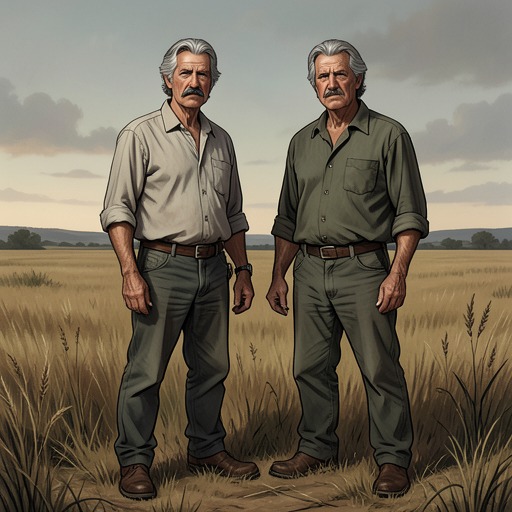
John Jaax was a prominent [Kansas City](entity:location-recall-location-kansas-city-f07d76732ba9) businessman and banker, a partner in a company that manufactured plastic for credit cards, and the younger brother of Jerry Jaax. The brothers had grown up on a Kansas farm and attended Kansas State. They were close, looked much alike, and even sounded alike: both were tall, prematurely gray, sharp-eyed, and calm in manner. John’s mustache was the chief visible difference between them. He lived in Kansas City with his wife and their two young children.
The killing took place on October 4, the same day a shipment of monkeys arrived at the [Reston Primate Quarantine Unit](entity:location-recall-location-reston-primate-quara-b84a5bceccf7). The book sets the two events alongside each other as separate developments in the larger narrative: the shipment would lead into the deaths of monkeys at [Reston](entity:location-recall-location-reston-83ff7bec570d), while John’s murder would change Jerry’s life. The evidence establishes this coincidence of date, not a connection between the events.
John and his wife planned to attend a parent-teacher meeting at their children’s school that evening. Near the end of the workday, he called her from the manufacturing plant to say that he would be working late. Because she was away from home, he left a message explaining that he would go directly from the office to the meeting and see her there. When he did not appear, she became worried and drove to the factory.
The plant was deserted, and its machines were silent. John’s office overlooked the factory floor from a balcony at the top of a staircase. His wife walked across the floor, climbed the stairs, and found the office door partly open. Inside, she discovered that John had been shot repeatedly. The account identifies the killing as violent but offers no resolution at the scene: the discovery begins a murder investigation, not an explanation of who was responsible.
## An investigation without an answer
The Kansas City Homicide officer assigned to the case was Reed Buente. He had known John from an earlier job as a security guard at the Bank of Kansas City, where John had been president, and admired him. Buente was determined to identify the killer or killers and bring them to trial, but the investigation found few physical clues and made no decisive progress.
John’s business partner, John Weaver, came under suspicion because the two men had been experiencing difficulties in their plastic business. But Weaver had an alibi. A later account reports that Buente confirmed this and that Weaver subsequently died of a heart attack. The case remained open; the suspicion surrounding a business dispute never became a solved account of John’s death.
Buente described to Jerry how readily and cheaply someone could arrange a killing. That observation offered no investigative breakthrough, but it made the violence feel less remote: a murder could be both deliberate and difficult to trace. As the weeks passed without a break in the case, even the investigator became discouraged. Jerry, meanwhile, called Kansas City Homicide nearly every day during October and November, seeking movement where none had come.
## Grief and the possibility of revenge
The murder left Jerry in a state of grief that the narrative presents as worsening rather than easing with time. [Nancy Jaax](entity:character-recall-character-nancy-jaax-a869e6975ccc) began to think that he was clinically depressed. Jerry told her that his life felt over and would never be the same, and that he could not comprehend John having an enemy. These statements locate the loss not simply in the death of a brother, but in the collapse of Jerry’s sense of how well he had known John and the life they shared.
At the funeral in Kansas City, Jerry and Nancy’s children, Jaime and Jason, looked into the coffin and remarked on how much their father resembled John lying there. The observation gives the brothers’ resemblance a painful new meaning: a likeness that had once been an ordinary fact of their closeness now confronted the family at the funeral. The account does not turn the children’s words into an explanation of the murder; it shows how the loss entered the family’s immediate experience.
Jerry began to think about getting a gun and going to Kansas City to kill John’s business partner. The thought arose amid grief and unresolved suspicion, but the narrative also records the reasoning that checked it. Jerry considered that he would go to jail and leave his own children to bear the consequences. More decisively, he recognized that Weaver might not have been behind the murder: killing him could mean taking an innocent man’s life. Jerry did not act on the idea in the evidence presented. His imagined retaliation instead exposes the pressure of an unsolved crime and the moral consequences that remain when grief has no answer to attach itself to.
## An unresolved case and its continuing weight
The case ends without identification of the killer or killers. Weaver’s position as a suspect, his alibi, the lack of physical clues, and Buente’s inability to break the investigation leave the central question unsettled. No evidence presented here establishes who murdered John or why. That unresolved status is essential to the event: it prevents Jerry’s grief from being converted into certainty and makes his restraint consequential, because he understands that suspicion is not proof.
The murder’s significance in the narrative therefore extends beyond the investigation’s failure. John’s absence reshapes Jerry’s life, intensifies his daily attention to the case, and brings him close to an act that could have created another bereaved family. The chronology also places this private catastrophe on the same October day as the arrival of the monkeys at Reston, joining two strands of the account without claiming that one caused the other. John’s murder remains unsolved; its lasting consequence in the evidence is the grief and danger it leaves behind.
Event 11
1979 Sudan Ebola outbreak
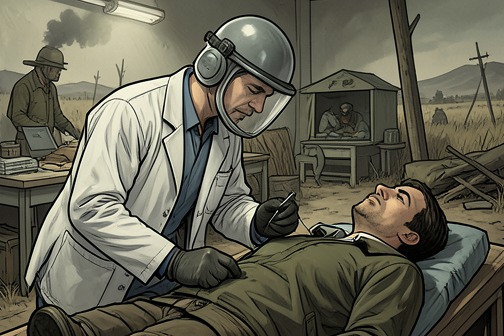
The [1979 Sudan Ebola outbreak](entity:event-recall-event-1979-9ee83027227f) brought Centers for Disease Control and Prevention physician [Joe McCormick](entity:character-recall-character-joe-mccormick-659fa42e0184) into an active epidemic zone to collect human blood and return a live strain to Atlanta. His fieldwork placed him among severely ill patients during a civil war, and a needle puncture exposed him to the virus. He nevertheless stayed to continue collecting samples and caring for patients. He survived without developing Ebola, an outcome that later informed his belief that the virus did not spread easily, especially through the air.
## Background and Mission
Reports reached the Centers for Disease Control and Prevention in 1979 that Ebola had reappeared in southern [Sudan](entity:location-recall-location-3c5b829c70e6), in the same general places where it had emerged in 1976. The renewed outbreak was dangerous not only because of the disease but because the affected region was also a war zone. McCormick volunteered to go there, collect human blood, and bring a strain back alive for study. No one else wanted to accompany him, so he traveled alone.
His assignment was a race against limited time and difficult access. He flew into the region in a small plane piloted by two frightened bush pilots. Near sunset, they landed at an airstrip close to a Zande village. The pilots would not leave the aircraft; they planned to depart at sunrise and warned McCormick that he had until then to find the virus. The arrangement left him one night on the ground, with no assurance that the plane would return for him.
## Work in the Village
Carrying his backpack, McCormick walked into the village and followed the sound of suffering to a mud hut. Villagers had gathered outside but did not enter. His flashlight had no batteries, so he asked for a light and was given a lantern. Inside, he found people in grave condition, including patients convulsing and others who were unresponsive. The hut was an active site of infection, and he understood that Ebola was present.
McCormick had brought rudimentary protective supplies: rubber gloves, a paper gown, a paper surgical mask, and paper covers for his shoes. After putting them on, he laid out blood tubes and syringes and began drawing samples. He worked through the night on his knees, collecting blood and helping the patients as best he could. The samples were intended not merely to document the outbreak but to carry the virus back for laboratory investigation.
During one blood draw, an older woman suddenly moved, and the needle came out of her arm and punctured McCormick’s thumb. He recognized that the injury could have introduced the virus directly into his bloodstream. At dawn, he gathered the blood tubes and handed them to the pilots. He now faced a choice: leave for medical assistance while the plane was available, or remain with the patients and continue the work.
## Exposure and Decision to Stay
McCormick stayed. He was a physician, and the people in the hut were his patients; he also wanted to collect more samples. He thought that if he developed a headache, he might be able to radio for help and have a plane sent for him. The decision meant accepting continued exposure rather than treating his own possible infection as a reason to end the mission.
He had brought two bags of blood serum, chilled on ice, which he believed contained antibodies that might protect him. He gave himself a transfusion, then rested in a hut. That night he could not sleep, preoccupied with the needle puncture and the possibility that the virus had begun multiplying in his body. He drank half a bottle of Scotch in an effort to sleep. The following days did not immediately resolve the uncertainty: he continued working with Ebola patients for four days and watched the older woman whose movement had caused the puncture.
On the fourth day, the woman recovered. McCormick concluded that she had probably been suffering from malaria rather than Ebola; what had looked like a seizure had likely been shivering from fever. The puncture had therefore occurred during an episode that was not itself an Ebola infection. That clarification reduced the force of the apparent exposure, but it did not erase the fact that McCormick had spent days in the hut among Ebola patients and had not developed the disease.
## Aftermath and Significance
McCormick’s survival became part of his reasoning about transmission. At a later meeting concerning the [Reston](entity:location-recall-location-reston-83ff7bec570d) outbreak, he argued that Ebola was not easy to catch, particularly through the air, pointing to his extended time in the hut without becoming ill. His experience supplied a concrete basis for his skepticism, but it remained one person’s exposure history: it could inform debate about risk without proving that all contact or inhalation was harmless.
The episode also shows how outbreak investigation depended on decisions made under severe constraints. McCormick had only the interval before the pilots’ departure, an improvised light, basic protective materials, and a small supply of blood-collection equipment. When the needle entered his thumb, his options narrowed to leaving or continuing; he chose to remain with the patients and the investigation. The older woman’s recovery then altered the meaning of the incident: the event that seemed to provide a direct measure of Ebola exposure involved a patient who probably had malaria instead.
The 1979 mission thus joined field investigation, clinical duty, and personal risk in a single night and its aftermath. McCormick returned with samples and without developing Ebola. His account later entered the argument over how readily the virus could spread, while the limits of what his survival could establish remained essential to interpreting that evidence.
Event 12
1989 Reston Ebola virus outbreak
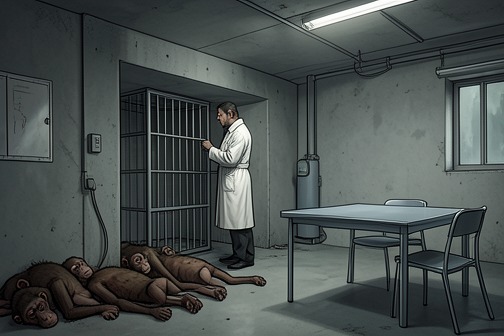
The [1989 Reston Ebola virus outbreak](entity:event-recall-event-1989-9479065ebd71) began among imported crab-eating macaques at a [Virginia](entity:location-recall-location-virginia-3350de451826) quarantine facility and forced researchers to confront the possibility that a highly dangerous filovirus had reached the United States. The monkeys died in waves as investigators first suspected heat stress and then a familiar monkey disease; laboratory testing instead linked the agent to Ebola [Zaire](entity:location-recall-location-72474dcf83fc). The outbreak killed animals but caused no human casualties. Four caretakers nevertheless tested positive for Ebola [Reston](entity:location-recall-location-reston-83ff7bec570d) virus, making their symptomless infections—and the likely role of airborne exposure—one of its most consequential findings.
## Setting and Early Deaths
The outbreak unfolded at the [Reston Primate Quarantine Unit](entity:location-recall-location-reston-primate-quara-b84a5bceccf7), a monkey house operated by Hazleton Research Products, a division of [Corning Incorporated](entity:organization-recall-organization-corning-incorpor-616c3a3c2920). Imported monkeys were held there for a month before they could be shipped elsewhere in the United States, a measure intended to keep animal infections from spreading to other primates or people. Dan Dalgard, a veterinarian with expertise in primate care, consulted for the facility while working as a principal scientist at Hazleton Washington.
On [October 4, 1989](entity:time-recall-time-october-4-1989-2db332c742a6), the facility received one hundred wild crab-eating macaques from the [Philippines](entity:location-recall-location-philippines-eed61c19bfb1). They had come from coastal rain forests on [Mindanao](entity:location-recall-location-mindanao-65360cd38ea6), passed through the [Ferlite Farms monkey holding facility](entity:location-recall-location-ferlite-farms-eb1b6df95fd8) near Manila, and traveled by way of Amsterdam and New York City before reaching Reston by truck. Two monkeys were already dead in their crates, a loss that was not unusual during transport. The larger concern emerged over the following weeks, when an unusual number of animals began dying in the monkey house.
By November 1, colony manager Bill Volt had counted twenty-nine deaths from the shipment. Most of the deaths were concentrated in Room F, where the imported monkeys were housed individually in cages. At the same time, the building's thermostat had failed: the heaters continued running, while the air-conditioning did not switch on. Volt wondered whether the heat was stressing the animals. When Dalgard came to inspect the room the following week, he found sick monkeys with fever and signs that could be mistaken for heat-related illness. The malfunctioning system offered a plausible explanation, but it did not account for the emerging pattern of deaths.
## Competing Explanations and Escalation
Two monkeys examined by Dalgard and Volt died overnight. Their internal findings did not fit heat stress neatly, and Dalgard suspected that an infectious agent might be moving through Room F. A newly arrived shipment was placed in Room H, two doors down the hallway, increasing the urgency of determining whether the illness could spread between rooms. Dalgard considered simian hemorrhagic fever, a disease that can spread rapidly among monkeys and is generally harmless to people. That possibility gave the deaths a recognizable explanation, but it remained a tentative diagnosis rather than a confirmed cause.
Dalgard sought help from the United States Army Medical Research Institute of Infectious Diseases at Fort Detrick. On November 13, he contacted virologist [Peter Jahrling](entity:character-recall-character-peter-jahrling-674d8eb27f6d), who agreed to examine samples. The investigation did not resolve the question at once: growing a virus for identification took several days. Meanwhile, the situation briefly seemed to improve. Volt reported that no animals had died overnight, and Dalgard thought the illness might be subsiding. The lull proved temporary. Eight monkeys stopped eating, deaths continued in Room F, and by November 16 monkeys in other rooms had also begun to die. Dalgard understood that the suspected infection might be spreading through the facility and that action could not wait indefinitely for a definitive answer.
Believing the Army's preliminary diagnosis of simian hemorrhagic fever, Dalgard and another Hazleton veterinarian euthanized the monkeys in Room F on November 16. The action was intended to contain a highly contagious disease in the colony. Yet examination of some apparently healthy animals did not reveal the expected signs, leaving Dalgard troubled by the gap between the diagnosis and what he was seeing. The decision bought no certainty: samples from the outbreak were still being investigated, and the disease had been present in the building since early October.
## Identification as Ebola-Related Virus
Jahrling's tests transformed the investigation. In a dark laboratory, he compared the monkey samples against blood serum associated with known filoviruses. The sample from the Mayinga strain of Ebola Zaire reacted strongly, whereas the Musoke sample did not and the Boniface sample reacted weakly. Jahrling repeated the test to rule out a mix-up; the result was the same. The finding indicated that the monkey-house agent was Ebola or something closely related to Ebola Zaire, not the simian hemorrhagic fever the veterinarians had suspected.
Jahrling immediately alerted C. J. Peters, and the results were carried out of the hot laboratory through a chemical-disinfection transfer tank. They took the evidence up the chain of command, bringing the finding to the attention of senior officers at the institute and its commander, Major General [Philip K. Russell](entity:character-recall-character-philip-k-russell-cf15f92558a1). Photographs of the agent showed a filovirus, while the test established a close relationship to Ebola Zaire without, by itself, proving that the Reston virus was exactly the same strain. This distinction mattered: researchers had encountered a filovirus outside Africa, close to a virus associated with devastating human disease, but still faced uncertainty about what the new agent was and how it behaved.
That uncertainty included the possibility of airborne transmission. The institute's researchers had evidence from earlier monkey experiments that Ebola could infect through the lungs, although they did not yet know how readily it could spread through air. The Reston outbreak sharpened the concern. It did not establish that people would develop severe disease from this virus, but it made the route of exposure a central question in assessing the threat.
## Human Infections and Significance
Four men who had worked as caretakers in the monkey house eventually tested positive for Ebola Reston virus. One, [John Coleus](entity:character-recall-character-john-coleus-6a6f0f176bc9), had cut his thumb with a contaminated scalpel, providing a clear opportunity for infection through a wound. The other three had no known cuts. Their infections therefore raised the possibility that exposure through the air had allowed the virus to enter their bodies, consistent with the concerns researchers had already raised about respiratory transmission among monkeys. The evidence supported that inference, though it did not establish every individual route of infection with equal certainty.
None of the four men became ill, and the virus eventually cleared from their blood without known lasting effects. At the same time, the monkey house's outbreak ended with the animals dying; the Army did not need to destroy the building itself. Thus the event produced a striking contrast: the agent was devastating to the macaques, yet the infected caretakers remained without symptoms. Why the human infections did not cause illness was still unknown. Their cases showed that infection and clinical disease were not identical outcomes, while leaving open how much a small genetic difference might affect the virus's behavior in people.
The outbreak also exposed the limits of early interpretation. A failing heating system supplied a plausible environmental explanation for sick animals, and simian hemorrhagic fever offered a familiar diagnosis, but neither accounted for the full evidence. Repeated testing shifted the understanding of the event from a suspected monkey disease to the discovery of an Ebola-related virus in a commercial primate facility. The chain linking wild-caught animals, international transport, quarantine, laboratory samples, and human caretakers made the outbreak a warning about how animal disease can reach new settings. Yet the precise origin of the virus and the reason for its symptomless course in the four men remained unresolved.
Event 13
1989 Reston Ebola virus epidemic
The [1989 Reston Ebola virus epidemic](entity:event-recall-event-1989-12f0f15da209) brought a lethal outbreak among captive monkeys into a primate facility in [Reston](entity:location-recall-location-reston-83ff7bec570d), [Virginia](entity:location-recall-location-virginia-3350de451826), and revealed a puzzling human dimension: four caretakers were infected, but none became ill. The response joined laboratory investigation, corporate and military decision-making, and the difficult work of containing an animal outbreak. Its ending offered relief without resolving the central danger: the virus could spread among monkeys and enter people, while the reasons it remained symptomless in those people were unknown.
## Background and the Reston outbreak
The episode belonged to a longer history of Ebola emergence, but it differed from the earlier outbreaks described in the book. In [Sudan](entity:location-recall-location-3c5b829c70e6), the virus spread through people and hospitals before the outbreak subsided; in [Zaire](entity:location-recall-location-72474dcf83fc), contaminated injection practices helped carry infection through a mission hospital and surrounding villages. In Reston, the immediate crisis centered on monkeys housed in a commercial primate facility. The contrast mattered: the outbreak demonstrated severe disease in monkeys but did not reproduce the human toll of those earlier epidemics.
The book places such outbreaks against the wider movement of people, animals, and viruses through changing environments. It describes forest edges under pressure from clearing and settlement, and a primate trade that brought wild animals into contact with workers, other species, and transport systems. The broader origin of emerging viruses remains uncertain in this account: ecological disruption and animal trade offer important context, not proof of the precise route by which this particular virus reached the monkeys at Reston.
## Escalation and transfer of the facility
As the Reston monkeys continued to die, [Nancy Jaax](entity:character-recall-character-nancy-jaax-a869e6975ccc) and her hot-zone partner, Ron Trotter, examined carcasses in the laboratory. The animals showed extensive intestinal disease consistent with Ebola. Some were so badly affected that the pair took liver and spleen samples without carrying out a full examination. The findings made the outbreak’s severity unmistakable, even as the absence of comparable illness among people remained unexplained.
On a Monday morning in early December, Dan Dalgard arrived at the primate building and saw caretaker [Milton Frantig](entity:character-recall-character-milton-frantig-58c9e14c6fbe) outside in a protective suit. Frantig bent over and vomited repeatedly in the parking lot. Dalgard had told the caretakers not to leave the building in masks or protective suits; now the sight of one of them visibly ill made the danger immediate. A second employee was also reported down, and Dalgard told his company’s senior managers that the monkey house should be turned over to the United States Army.
The transfer became a dispute about responsibility as well as urgency. The company wanted its oral agreement with the Army put in writing and asked that the Army accept legal responsibility after taking over. C. J. Peters rejected the proposed liability arrangement, arguing for speed and clarity. Dalgard agreed to send a simple letter transferring the facility. Peters took it to General [Philip Russell](entity:character-recall-character-philip-russell-19a549b4fb3f); they signed it and returned it by fax without involving Army lawyers. With the handover complete, [Jerry Jaax](entity:character-recall-character-jerry-jaax-95051376e6ab) faced the task of leading a larger response team into a building full of infected animals. The United States Army’s animal-care technicians included young soldiers with little experience in protective suits, alongside civilian specialists accustomed to high-containment work.
## Containment and the human cases
The response depended on more than identifying the virus. The Army team had to manage the infected animals and the risk to the people entering the building. Meanwhile, investigators examined the caretakers’ exposures and monitored those who might have been infected. Milton Frantig was isolated at [Fairfax Hospital](entity:location-recall-location-46675cb5dec8). His fever disappeared, he developed no nosebleeds, and his blood tests did not show Ebola; he was later allowed to go home after it appeared that he had a mild case of flu.
By the nineteenth day after the exposure that had alarmed [Peter Jahrling](entity:character-recall-character-peter-jahrling-674d8eb27f6d) and Tom Geisbert, neither they nor the monkey workers had developed signs of Ebola. Their survival did not mean that no one had been infected. The Centers for Disease Control and Prevention traced the monkeys to the [Ferlite Farms monkey holding facility](entity:location-recall-location-ferlite-farms-eb1b6df95fd8) near Manila, a stop on their journey from [Mindanao](entity:location-recall-location-mindanao-65360cd38ea6) to Washington. Investigators found that monkeys had also been dying there, while Philippine monkey workers, like the caretakers in Reston, did not appear to have become sick.
Eventually, all four men who had worked as caretakers in the monkey house tested positive for Ebola Reston virus: Jarvis Purdy, Milton Frantig, [John Coleus](entity:character-recall-character-john-coleus-6a6f0f176bc9), and a fourth employee. Their infections cleared naturally, and none was known to have suffered lasting effects. Coleus had cut his thumb with a bloody scalpel, providing a clear possible route of exposure in his case. The other three had not cut themselves. Their infections therefore sharpened concern that the virus might have entered through the lungs, although the precise route was not established for each man.
## Findings and unresolved significance
The infections among caretakers altered the interpretation of the outbreak. Researchers at the United States Army Medical Research Institute of Infectious Diseases concluded that Ebola could spread through the air among monkeys, because three of the four infected men had no known cut. General Philip Russell later explained that recognizing the respiratory evidence made the danger feel greater in retrospect: a virus capable of rapid respiratory transmission among people, if it changed in certain ways, could pose a far more serious threat. That possibility was a warning about potential, not a claim that the Reston virus had caused such transmission in humans.
The epidemic ended without human casualties, and the monkey house was ultimately destroyed by the virus itself rather than by a separate military destruction effort. Yet the four positive tests remained an unsettling qualification to that outcome. Ebola Reston had entered human blood and multiplied without making the workers recognizably ill. The account offers no settled explanation. A small change in the virus’s genetic structure was proposed as a possible reason for its sharply different effects in monkeys and people, but the mechanism remained unknown.
The event’s force lies in the gap between visible catastrophe and human outcome: the monkeys became gravely ill, the workers carried the virus without recognized disease, and neither observation answered what the virus might do under different conditions. Reston was therefore both a contained emergency and a warning against treating one benign human outcome as proof of safety. Its questions about animal trade, transmission, and host differences remained open even after the immediate crisis had passed.
Event 14
1989 Reston monkey-house eradication operation
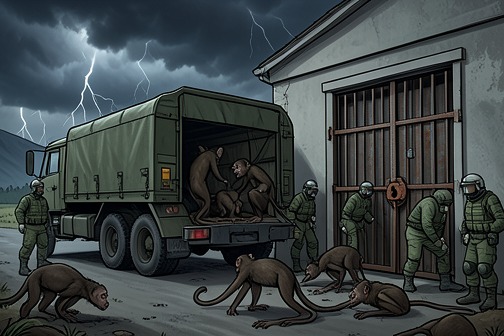
The [1989 Reston monkey-house eradication operation](entity:event-recall-event-1989-9cda105f4278) was a U.S. Army campaign to stop an Ebola-like outbreak among monkeys at the [Reston Primate Quarantine Unit](entity:location-recall-location-reston-primate-quara-b84a5bceccf7). It combined the transfer of a private facility to military control, the euthanasia and examination of its animals, and the eventual sterilization of the building. The operation contained the immediate animal outbreak, but the later discovery that four caretakers had been infected without symptoms made its apparent success more unsettling: the virus had crossed into people even though none became ill.
## Transfer and decision
As the crisis worsened, Dan Dalgard convened senior managers at his company and told them that two employees were down and that a second might be developing Ebola. The managers approved turning the monkey house over to the Army, but wanted the agreement in writing and the Army to accept legal responsibility for the building. C. J. Peters rejected the liability proposal, prioritizing a clear and rapid decision over further negotiation. Dalgard agreed to send a simple transfer letter. Peters took it to [Philip Russell](entity:character-recall-character-philip-russell-19a549b4fb3f); the two reviewed it without involving Army lawyers, signed it, and faxed it back. The monkey house then passed into Army hands, making [Jerry Jaax](entity:character-recall-character-jerry-jaax-95051376e6ab) responsible for leading a much larger team into the facility.
The transfer solved the immediate question of who would direct the response, not the difficulty of carrying it out. Jaax commanded the 91-Tangos, Army animal-care technicians that included young soldiers with little experience in protective suits. Civilian staff included experienced specialists who had worked in Chemturion suits. At a briefing, Jaax explained that the team would handle a large amount of blood and sharp instruments and would use disposable biocontainment suits. He asked for volunteers and made clear that no one could be forced to go. He excluded a pregnant sergeant because of the danger Ebola posed to pregnant women, then told the selected personnel to keep the mission secret from their families and report before dawn.
## Preparation and entry
Before the team entered the monkey house, [Gene Johnson](entity:character-recall-character-gene-johnson-4ea21a19acdb) wrote a detailed operational script, working through where each person would stand and how hands, instruments, and samples would be managed. Jaax memorized the procedures, assigned partners, and drew up both a buddy roster and an order of entry. In darkness under floodlights, soldiers and civilian staff assembled at the loading dock and departed in a fleet that included a refrigerated truck, vans, a pickup, an ambulance carrying a bubble stretcher, and civilian cars. At the building, Johnson told the team that two caretakers were hospitalized and that human transmission was possible. This warning made the operation more than a plan to manage an animal outbreak: the team would be working in a facility where the virus might already have reached people.
The operation required a balance between protecting the workers, obtaining useful scientific material, and limiting the animals' suffering. Captain [Mark Haines](entity:character-recall-character-mark-haines-5a433f969ef6) instructed the team to treat euthanasia as stopping the virus from spreading, to avoid casual behavior around the monkeys, and to watch their partners and used needles. The rules also reflected an ethical tension that had surfaced elsewhere in the response. [Nancy Jaax](entity:character-recall-character-nancy-jaax-a869e6975ccc) regarded care for animals as part of her veterinary duty, while also seeing medical research as a means of protecting human lives. For the team, the animals were both victims of the outbreak and sources of samples that might clarify what the virus was doing.
## Euthanasia and examination
Inside, Jaax divided personnel into euthanasia, bleeding, and necropsy teams. They established a processing area beside an office, where a wheeled examination table served as the center of an assembly line. Blood and objects were washed toward a floor drain, and bleach followed each release of blood to reduce the chance that contaminated material could reach [Reston](entity:location-recall-location-reston-83ff7bec570d)'s sewage system. Jaax and others brought anesthetized monkeys from their rooms; the bleeding team collected samples, the euthanasia team administered the drug, and the necropsy team examined the animals and bagged their remains. The work produced 3,500 clinical samples.
The scale and pace did not remove the need to care for the animals. Jaax fed monkeys in their rooms while inspecting them for signs of disease, and the team was instructed to take breaks and check one another's suits for tears. This concern for animal welfare coexisted with the decision that every monkey in the building had to be euthanized. The response thus made explicit a conflict already present in laboratory research: duties to animals and duties to prevent human suffering could converge in purpose while remaining painful in practice.
At four o'clock on Thursday, December 7, the last monkey had been killed and bagged, but the search was not over. A small escaped monkey had taken hours to catch; it was finally found wedged behind a cage and anesthetized. A further inspection uncovered a chest freezer containing ten or fifteen frozen monkeys from Room F, the outbreak's original hot spot, as well as vials of sedative. Johnson ordered the newly discovered material decontaminated rather than sampled. The frozen animals did not fit into the containers used for the others and were left in the hallway for the decontamination team. Their discovery showed that even after the visible work seemed finished, hidden material remained inside the building.
## Sterilization and aftermath
The final phase treated the monkey house itself as contaminated. On December 18, the decontamination team scrubbed the interior with bleach until paint came off the concrete floors. They then sealed doors, windows, and vents with duct tape and plastic. Thirty-nine electric frying pans were arranged through the building and loaded with disinfecting crystals. When switched on, the pans released formaldehyde gas, which remained sealed inside for three days and reached offices, ducts, drawers, equipment, furniture, and floor drains. The team later retrieved paper patches carrying harmless bacterial spores; the spores had been killed by the treatment. The account describes the building as sterilized, a temporary place where nothing lived.
That outcome did not settle what the outbreak meant for human health. Eventually, all four men who had worked as caretakers at the monkey house tested positive for Ebola Reston virus. [John Coleus](entity:character-recall-character-john-coleus-6a6f0f176bc9) had cut his thumb, but three infected workers had no known cut. None became ill, and the virus later cleared from their blood. Researchers at the U.S. Army Medical Research Institute of Infectious Diseases concluded that the infections of workers without cuts were evidence that transmission could occur through the air. The operation had ended the outbreak in the facility without human casualties, but its aftermath exposed an unsettling distinction: the virus could infect people without causing the disease observed in the monkeys, and the route of infection might not require an obvious wound.
Event 15
1990 Reston Ebola virus outbreak
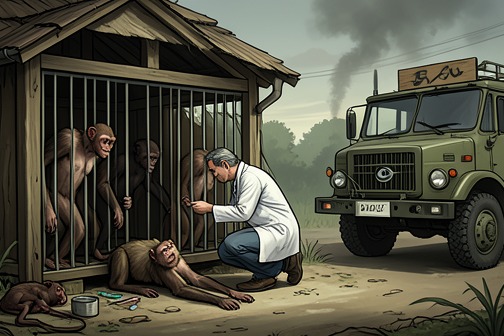
The [1990 Reston Ebola virus outbreak](entity:event-recall-event-1990-26700bd08c5d) was a second wave of infection in the monkey house near [Washington, D.C.](entity:location-recall-location-washington-d-c-2a63ac520a1d) After the first outbreak, the facility had been certified as decontaminated and returned to Hazleton Research Products. When infected monkeys began dying there again in January, the recurrence showed that the earlier crisis had not ended the possibility of Ebola [Reston](entity:location-recall-location-reston-83ff7bec570d) returning to the building.
## Recurrence in the Monkey House
Hazleton restocked the facility with crab-eating macaques trapped in the rain forests of [Mindanao](entity:location-recall-location-mindanao-65360cd38ea6) in the [Philippines](entity:location-recall-location-philippines-eed61c19bfb1). Less than a month later, monkeys in Room C began dying, and Dan Dalgard alerted [Peter Jahrling](entity:character-recall-character-peter-jahrling-674d8eb27f6d) that the facility appeared to be affected again. The virus was identified as Ebola, and the account links this outbreak to the newly imported animals.
Because the first outbreak had caused no human casualties, the Army, the Centers for Disease Control and Prevention, and Hazleton jointly chose to isolate the monkeys and allow the infection to run its course. Dan Dalgard hoped that some animals might survive, while Hazleton wanted to avoid another Army intervention in protective suits. Their decision also turned the outbreak into an observation of what Ebola could do in a confined monkey population: rather than immediately remove the animals, they would watch the disease spread among them.
## A Changing Disease Pattern
In the confined monkey population, Ebola Reston spread rapidly from room to room and appeared to present differently from the disease seen during the previous outbreak. Infected animals developed substantial nasal discharge, sometimes with blood, and pneumonia; their lungs were badly affected. When an animal with a nosebleed appeared in a room, about 80 percent of the monkeys there generally died soon afterward. The scale and speed of the losses made the outbreak a stark demonstration of how efficiently the virus could move through a densely housed population.
The pattern raised the possibility that the virus had changed. Institute scientists suspected that they were seeing a mutant strain, distinct in some way from the virus encountered the previous December. Its coldlike symptoms suggested that it might be adapting to a new host and changing its effects, but the account presents this as a concern and hypothesis, not a confirmed explanation. The virus’s apparent ability to alter its character over a short interval deepened uncertainty about what form it might take in a later outbreak.
The spread also exposed the importance of the building’s shared air. By January 24, infection had reached Room B, and in the following weeks it entered Rooms I, F, E, and D. The account describes Ebola moving through the building’s air-handling ducts, linking separate rooms into a single outbreak. What had been intended as an opportunity to observe infection in a confined monkey population thus became evidence of how the facility’s layout and airflow could carry the disease beyond its first affected room.
## Human Exposure and Uncertain Transmission
In mid-February, a Hazleton caretaker identified as [John Coleus](entity:character-recall-character-john-coleus-6a6f0f176bc9) cut his thumb with a scalpel while examining a dead monkey. The blade had been used to cut into the animal’s liver, a tissue in which Ebola commonly accumulated. A sample of the liver was sent to the United States Army Medical Research Institute of Infectious Diseases, where testing showed that it contained a very high concentration of virus. Researchers feared that Coleus had received a dangerous exposure. The Centers for Disease Control and Prevention did not place him in isolation, and he continued his usual activities, including visiting bars with friends.
Coleus also underwent surgery while still within the incubation period. The account records no excessive bleeding during the procedure; he recovered and suffered no lasting effects from the exposure. His survival did not resolve the question of how the other caretakers had encountered the virus. All four men who worked in the monkey house eventually tested positive for Ebola Reston, although only Coleus was known to have cut himself. The virus had entered and multiplied in each man’s body, but none developed recognized illness, and it later cleared from their blood.
The contrast between infected monkeys and symptomless workers became one of the outbreak’s most consequential findings. Since three of the four men had no known cut, researchers considered infection through the lungs the likeliest explanation, raising the possibility that the virus had spread through the air. That remained an inference rather than a fully established account of each man’s exposure. The episode nevertheless sharpened concern that a virus producing severe disease in monkeys could enter people without causing visible illness, leaving both its route of transmission and its effects in humans uncertain.
## Significance and Unresolved Risk
The outbreak’s aftermath resisted a simple verdict of either safety or catastrophe. Ebola Reston had devastated the monkey population, yet the four infected caretakers remained without recognized symptoms; the text leaves unexplained why the virus behaved so differently in people. It proposes that a very small genetic change, perhaps altering one of the virus particle’s seven proteins, might have transformed its effects in humans. That explanation remains conjectural, but it frames the contrast as a biological uncertainty rather than proof that the strain was harmless.
[Philip Russell](entity:character-recall-character-philip-russell-19a549b4fb3f) later understood the episode as more frightening in retrospect: the evidence from the monkeys suggested that small changes might enable rapid respiratory transmission among humans. The possibility was not an outcome of the 1990 outbreak, but a warning about what the virus might become. The episode therefore ended without human illness while leaving its central question open: whether the difference between a devastating monkey disease and a mild or symptomless human infection could persist if the virus changed.